Before Your Procedure
Review medications, arrange transportation when required, follow eating and drinking instructions, and bring questions to the team.


VIS care navigation
VIS Careers
Review medications, arrange transportation when required, follow eating and drinking instructions, and bring questions to the team.

Patient Resources
Preparing for your visit
Your care team may provide additional instructions based on the visit or procedure. Use this list as a general starting point.
Photo ID and insurance card
Current medication list
Relevant imaging and medical records
Referral or prior authorization, if required
Questions to ask your specialist
Transportation plans if a procedure is scheduled
Insurance & Coverage
Most major insurance plans are accepted, including Medicare. Our team verifies your benefits before your visit, so you know what to expect before you arrive.

Your care journey
Every patient receives procedure-specific guidance. These general steps can help you understand the shape of the experience.
Review medications, arrange transportation when required, follow eating and drinking instructions, and bring questions to the team.
Your care team will review the plan, confirm consent, monitor you throughout the procedure and explain immediate recovery steps.
Follow activity and wound-care guidance, take medications as directed, attend follow-up visits and call with concerns.
Always follow the instructions from your own VIS care team. Call 911 for a medical emergency.
Screenings & evaluation
Screening and evaluation availability varies by location. VIS can help determine where to begin.
A conversation about risk factors and whether noninvasive testing may be appropriate.
May be relevant for adults with a family history of vascular disease, a smoking history, diabetes or high blood pressure.Evaluation of symptoms such as walking pain, color change, cold feet or slow-healing wounds.
May be relevant when leg symptoms limit walking or a wound on the foot is not improving.A focused specialist review for venous, arterial, pain, men's health or women's health concerns.
May be relevant when a condition has already been suggested and you want a specialist opinion on the options.Patient education
Each area of care lists the conditions VIS treats within it, so you can arrive with more precise questions.
Blog & patient guides
Educational content can support a care conversation, but it cannot replace an individual evaluation.
 Women's Health
How imaging and a specialist opinion shape a fibroid treatment plan.
Read the guide → Men's Health
What BPH symptoms can mean, and where a minimally invasive option fits.
Read the guide → Pain & Inflammation
What chronic joint inflammation can mean, and where a vascular option fits.
Read the guide → Patient Education
A practical checklist for transportation, medications, questions and recovery planning.
Read the guide → Venous Disease
How venous ultrasound and specialist evaluation shape treatment decisions.
Read the guide → Arterial Disease
What reduced blood flow can feel like and when to request a vascular evaluation.
Read the guide → Treatments & Procedures
Prepare for a clear conversation with your specialist.
Read the guide →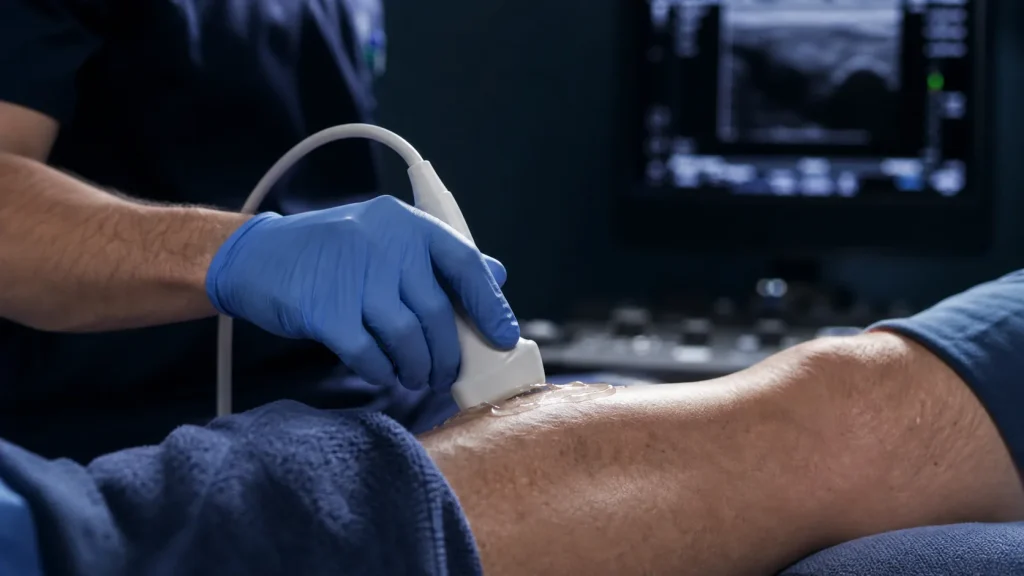 Patient Education
A simple guide to this non-invasive diagnostic exam.
Read the guide → Vascular Health
Learn which symptoms deserve a vascular evaluation.
Read the guide →Patient Stories
Real feedback published by VIS and attributed patient review sources.
“The level of care I received from Dr. Khurana and his staff was exceptional.”
Frequently asked questions
Still have a question? A VIS care navigator can help route it to the right person.
Use the Schedule a Consultation button anywhere on this site, or call (605) 217-5617. A VIS care navigator will confirm the location, the specialist and what to bring.
Referral requirements vary by insurance plan and by the type of service. Many patients can be seen without one, but it is worth confirming with your insurer before scheduling.
A photo ID, your insurance card, a current medication list, any relevant imaging or reports, and a written list of symptoms and questions.

Take the next step
Talk with a specialist about your symptoms and your options, or ask a care navigator where to begin.