


How imaging and a specialist opinion shape a fibroid treatment plan.
Fibroids are benign growths in the wall of the uterus, and many cause no symptoms at all. When they do, heavy or prolonged bleeding and pelvic pressure are the most common reasons patients seek an evaluation.
Ultrasound is usually the first step, sometimes followed by MRI to map the size, number and position of the fibroids in more detail. That mapping matters because it shapes which treatments are realistic options.
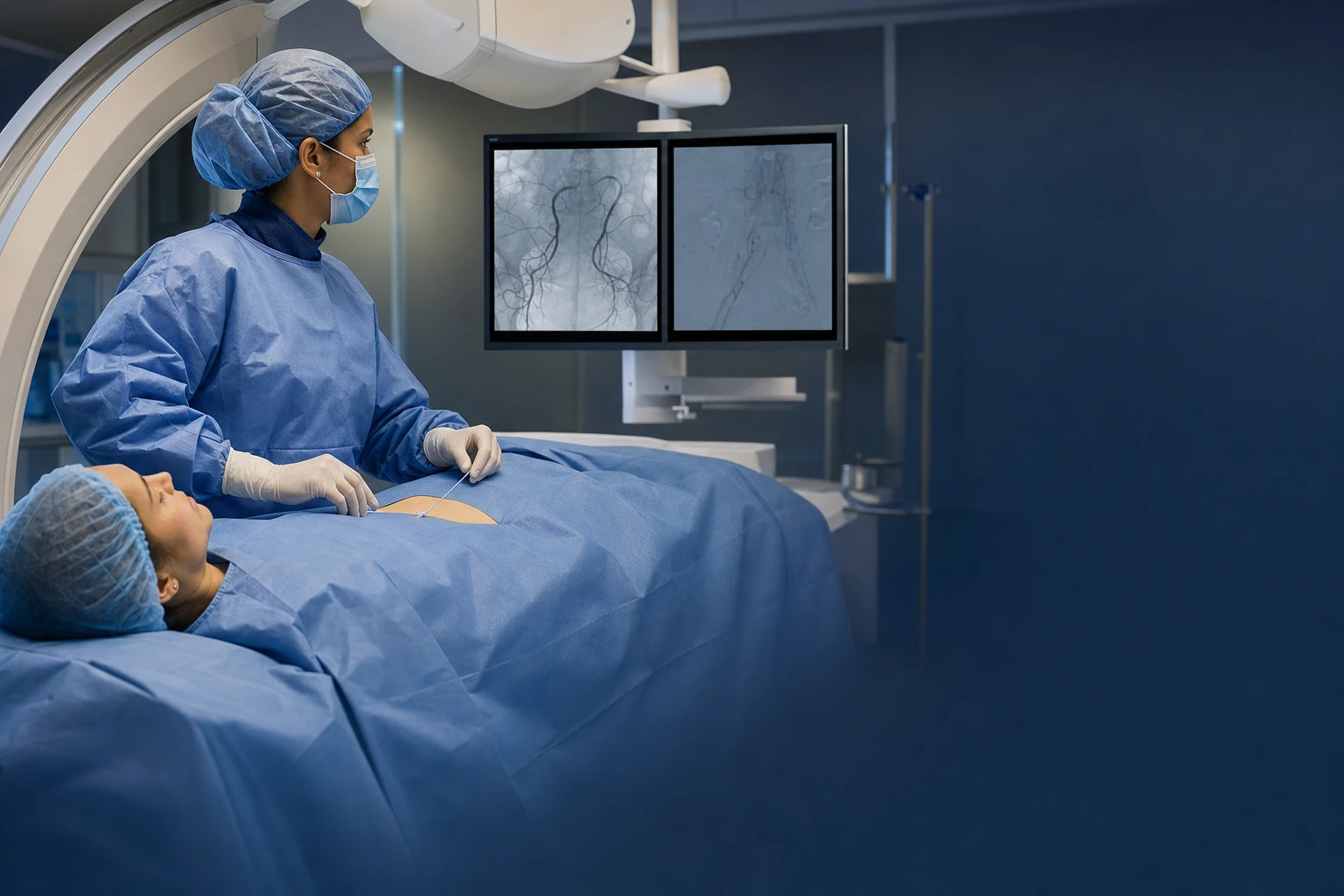
Uterine fibroid embolization is a uterus-sparing, image-guided option that reduces blood flow to the fibroids rather than removing the uterus. Whether it fits depends on the mapping, your symptoms and your plans for the future, which is why the conversation usually includes your gynecologist as well.
Worth bringing to your appointment
- Track cycle length, heaviness and any pelvic pressure
- Ask whether ultrasound or MRI is the right next step
- Discuss your plans for future pregnancy before treatment is chosen
Educational content cannot replace an individual evaluation. Follow the instructions from your own VIS care team.
Educational content is intended to support conversations with your healthcare provider. It does not replace an individual medical evaluation, diagnosis, or treatment plan.